
Women Deserve the Whole Conversation!
Let’s Talk About Hormone Replacement Therapy and Heart Health. Because Women Deserve the Whole Conversation.
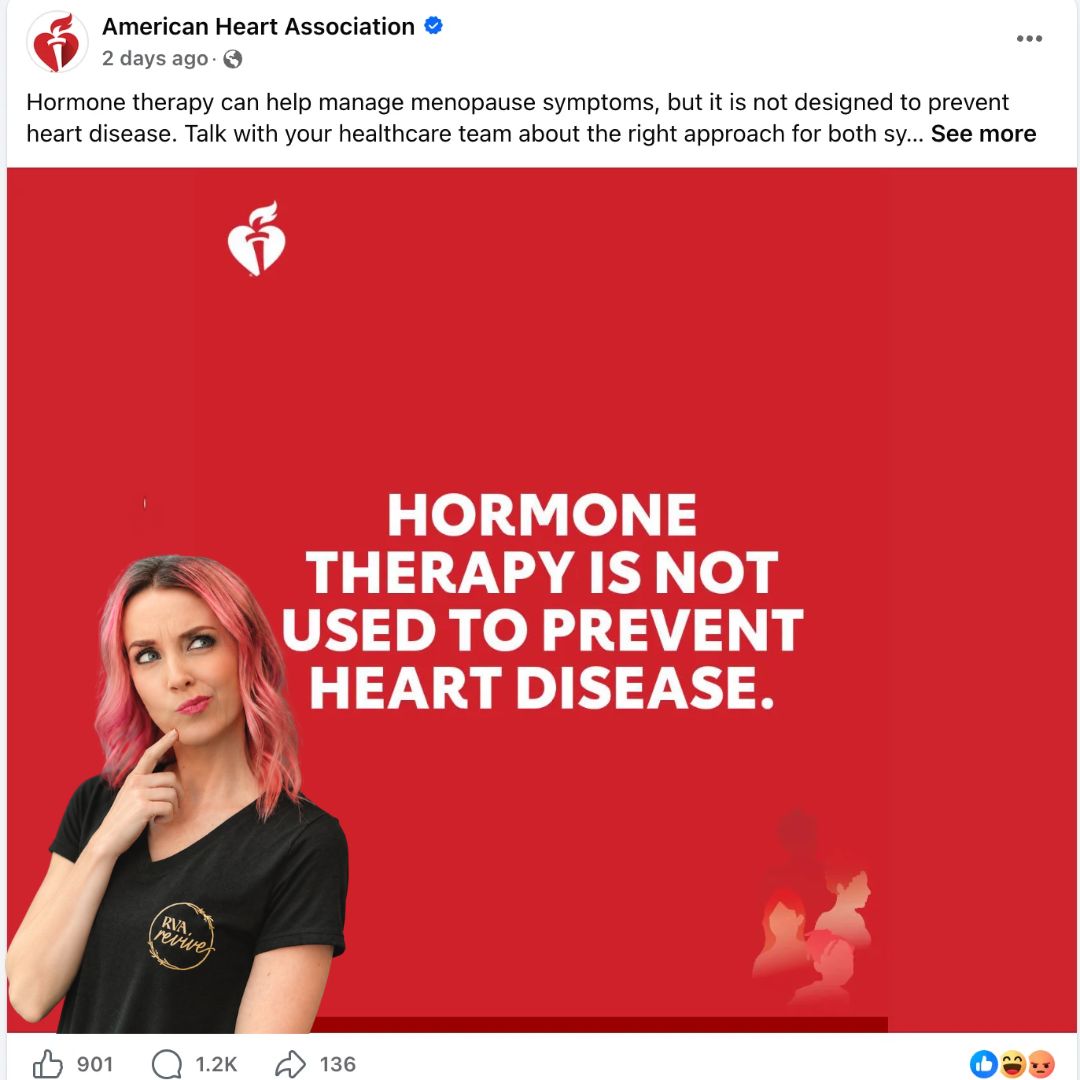
Recently, the American Heart Association (AHA) shared a statement emphasizing that hormone replacement therapy (HRT) is not recommended for the prevention of cardiovascular disease.
As a nurse practitioner who works closely with women navigating perimenopause and menopause, I want to address this with both respect and concern.
First, I have tremendous respect for organizations that work to advance cardiovascular health. Their recommendations matter. They influence how clinicians practice, how patients make decisions, and ultimately, the care women receive.
But I also believe that when we communicate medical information to the public, context matters. Tremendously.
And in this case, I believe some very important context is missing.
Not being recommended for cardiovascular disease prevention is NOT the same as having no cardiovascular benefit.
There is a growing body of research suggesting that menopausal hormone therapy, particularly when initiated earlier in the menopausal transition, may have meaningful benefits extending well beyond relief from hot flashes and night sweats.
Consider what the research has shown:
- The Danish Osteoporosis Prevention Study (DOPS) followed recently menopausal women and found a significant reduction in a combined outcome of death, heart attack, and heart failure among women receiving hormone therapy over 10 years.
- A Cochrane systematic review found that women who initiated hormone therapy before age 60 or within 10 years of menopause experienced approximately 48% lower coronary heart disease risk and 30% lower all-cause mortality in subgroup analyses.
- The ELITE randomized trial demonstrated that estradiol initiated within six years of menopause slowed progression of carotid artery thickening, a marker of subclinical atherosclerosis. That same benefit was not observed in women who began treatment much later.
These are not insignificant findings.
And interestingly, the AHA’s own 2020 scientific statement acknowledged evidence supporting potential cardiovascular benefits when menopausal hormone therapy is initiated early.
So why does the public conversation so often leave women with the impression that hormone therapy offers no benefit to their cardiovascular health?
I think that’s a fair question to ask.
Now, I want to be clear. These studies do not establish that HRT should replace proven cardiovascular prevention strategies, nor do they mean hormone therapy is appropriate for every woman. Some findings come from subgroup analyses, and larger trials have not consistently demonstrated cardiovascular protection. Timing, formulation, route of administration, medical history, and individual risk factors all matter.
But that is precisely why we should be having more nuanced conversations—not shutting them down with oversimplified messaging.
For too long, women have been told to simply endure the changes associated with menopause. Poor sleep, declining quality of life, changes in body composition, bone loss, and symptoms that can affect nearly every aspect of daily living have too often been minimized.
We can do better than that.
At RVA Revive, we believe hormone replacement therapy deserves thoughtful, individualized consideration. We believe in evaluating the whole woman—not simply treating a laboratory number or dismissing symptoms as an inevitable part of aging.
We also believe that the potential long-term health implications of hormone therapy deserve continued research and open scientific discussion.
Being pro-HRT does not mean ignoring risks. It means understanding the evidence, recognizing where benefits may exist, and helping women make informed decisions based on their individual circumstances.
Women deserve more than a headline. They deserve context. They deserve options. And most importantly, they deserve to be active participants in decisions about their own health.
Our position at RVA Revive is simple: We support evidence-informed hormone optimization, individualized care, and the right of every woman to have a meaningful conversation about the potential benefits and risks of hormone therapy.
Because menopause is not the end of a woman’s health story. And we shouldn’t approach it as though it is.
— Ashley, NP
Co-Owner, RVA Revive
Related Posts


The seasons are changing, the holidays are approaching, and so are all the delicious temptations…
Coming Soon to RVA Revive! You notice a few extra strands in the shower. Then…